This repository consists of modules and infrastructure for experimenting with protocols for voluntary coordination and capacity-building. It proposes a re-engineering of how collective action and resource allocation can be coordinated.
Coordination is based on:
- Publishing (what is, capacities/needs/priorities etc.t)
- Derivation (what we can infer collectively)
Participants may publish/derive data from local/network-data. For example: capacities, needs, priorities, recognition of contributions, allocations, collective memberships, environmental data, qualities, goals, estimates, decisions, sources for deriving, filters and their applications, or any other data.
Participants can publish/propose/offer/allocate with the help of protocols of their choosing.
Foundational Principles:
- Sovereignty and Interoperability: Participants retain full control over their own data, recognitions, and capacity allocations. Participants explore protocols enabling collaboration without requiring surrender of autonomy.
- Optimized Coordination: The vision is for a significant portion of capacities/resources being allocated by participants informed by relevant derivations on the state of network data, drastically reducing transaction costs and delays.
- Scale-Invariant Relationships: Coordination is based on proportions/ratios (rather than fixed quantities), allowing relationships to scale up or down without friction.
Try It: free.playnet.lol (browser-based, peer-to-peer, no installation required)
Pilot Programs: Organizations interested in piloting Free Association for resource coordination can:
- Start with a discretionary budget allocation
- Implement within specific program areas or partnerships
- Join coordination coalitions with other pilot organizations
- Access technical support and implementation guidance
Development Priorities:
- User interface refinement
- Protocol implementation and testing
- Documentation and educational materials
- Technical infrastructure and deployment
Ways to Contribute:
- Technical Skills: Contact team to discuss development needs
- Resources: Support infrastructure and operational requirements
- Network Building: Share with potential organizational partners

Contact:
- General inquiries: info@openassociation.org
- Coalition and partnerships: coalition@openassociation.org
Additional Resources:
Interface Demonstration:
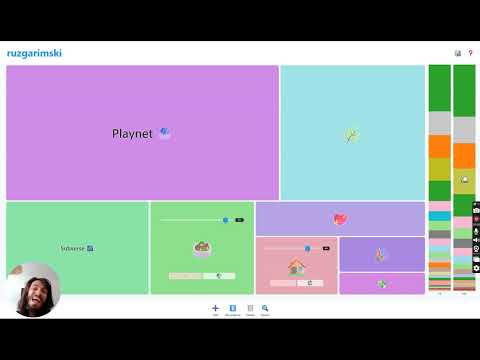
Traditional coordination requires lengthy political negotiations before resources reach those in need. Free Association transforms this:
Traditional System:
- Day 1: Crisis hits
- Day 30: Coordination bodies convene
- Day 90: Political negotiations begin
- Day 180: Pledges finalized
- Day 270+: Resources begin flowing
Free Association:
- Day 1: Entity declares need in system
- Immediately: All participants see need; system recalculates optimal allocation
- Day 1-2: Resource commitments transparent and automatic based on pre-established prioritization
- Day 2-3: First resources arrive from mutual partners
- Ongoing: System continuously adapts as needs evolve
Speed: Resource allocation occurs in seconds rather than months
- Target: <48 hours from need identification to commitment
- vs. typical 90+ days in traditional systems
Efficiency: Direct resource flow with minimal overhead
- Target: >95% of resources deployed to mission
- vs. typical ~70% after administrative costs
Adaptability: System responds in real-time as circumstances evolve
- Priorities change → allocations recalculate automatically
- New needs emerge → system converges to new equilibrium
- Partners join/leave → network adapts seamlessly
Prerequisites:
Development:
bun install
bun run dev
Testing:
npm test # Uses vitest and playwrightProduction Build:
bun install
bun run buildLicense: GNU Affero General Public License v3.0 with Additional Terms
✅ Anyone can use Free Association - individuals, cooperatives, non-profits, governments, corporations
✅ You can modify and deploy it - fork it, adapt it, run your own instance
✅ If you run it as a network service - you must share your source code (that's the AGPL requirement)
✅ You must give attribution - credit where credit is due, prevents invisible use
✅ Modified versions must be clearly marked - prevents protocol fragmentation
We want universal access without universal capture. AGPL ensures:
- Anyone can use it (no restrictions on who)
- Network services must share improvements (prevents proprietary capture)
- Modifications remain open (keeps the commons healthy)
The additional terms (permitted by AGPL Section 7) add:
- Attribution requirement - prevents invisible cooptation
- Protocol fidelity marking - prevents trust-breaking fragmentation
- Interoperability commitment - prevents vendor lock-in
Together: Open for all, captured by none.
This repository is the canonical reference implementation of the Free Association protocol, maintained by the core development team.
Other implementations are encouraged, but protocol conformance is measured against this implementation. See PROTOCOL.md for the formal specification.
- Licensing: info@openassociation.org
- Protocol: See PROTOCOL.md or open an issue
- Governance: See GOVERNANCE.md
